Did I actually learn it? Can I do it again on my own?
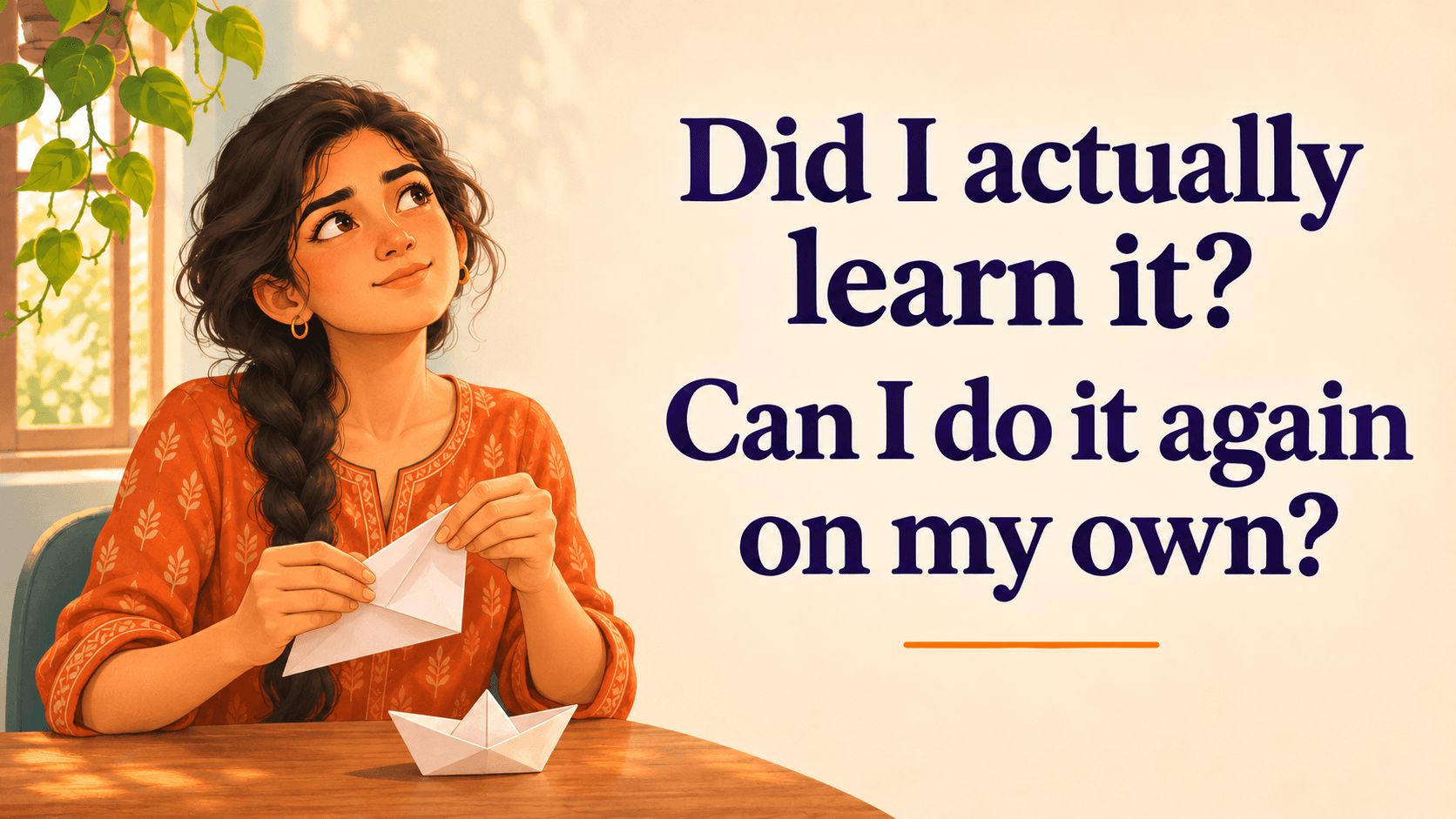
Sometimes, learning feels clear in the moment. We follow an explanation, complete a task and feel ready to move on. But what happens when we try the same thing later, without that help?
That difference between how we perform during practice and what we can still do later can tell us something useful about learning.
Let’s think about this with a simple example.
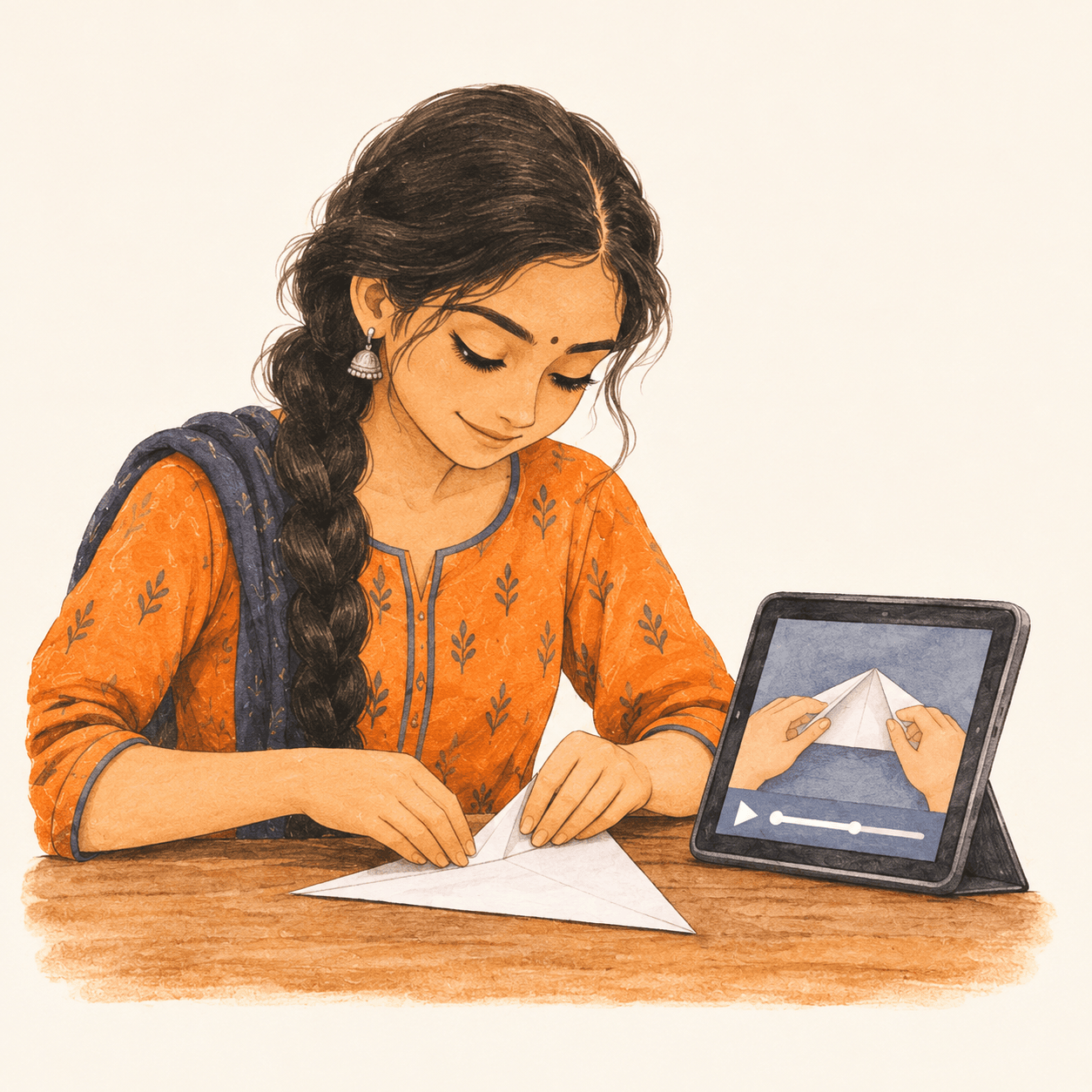
Imagine you want to learn to fold a paper boat. You find a video, take a sheet of paper and follow along. You pause when you need to and copy each fold.
Soon, a boat stands on the table. You feel pleased. “I can do this.”
The next day, you pick up another sheet of paper. This time, you try without the video. You make the first fold, then pause. What comes next?

You did make a boat yesterday, and that is something to feel good about. The video helped you follow each step. When you try again without it, you get a chance to see which folds you remember and where you might need a little more practice.
Both attempts tell you something useful. The first shows what you could do with guidance; the second gives you clues about what you can still do on your own. This is one way to think about the difference between performance and learning.
Performance is how you do on a particular attempt. Finishing the boat shows that you could make it with the video’s help.
Learning is a lasting change in what you know or can do through practice or experience. We cannot see that change directly. We look for signs of it: what you can still do later, and whether you can use what you have learned in another relevant situation.
The same thing can happen while studying. Suppose your teacher solves a maths problem in class. As you follow each step, the method makes sense. Or perhaps you are stuck on a question and watch a solution video on YouTube. Once the video walks you through it, you understand why each step was taken.
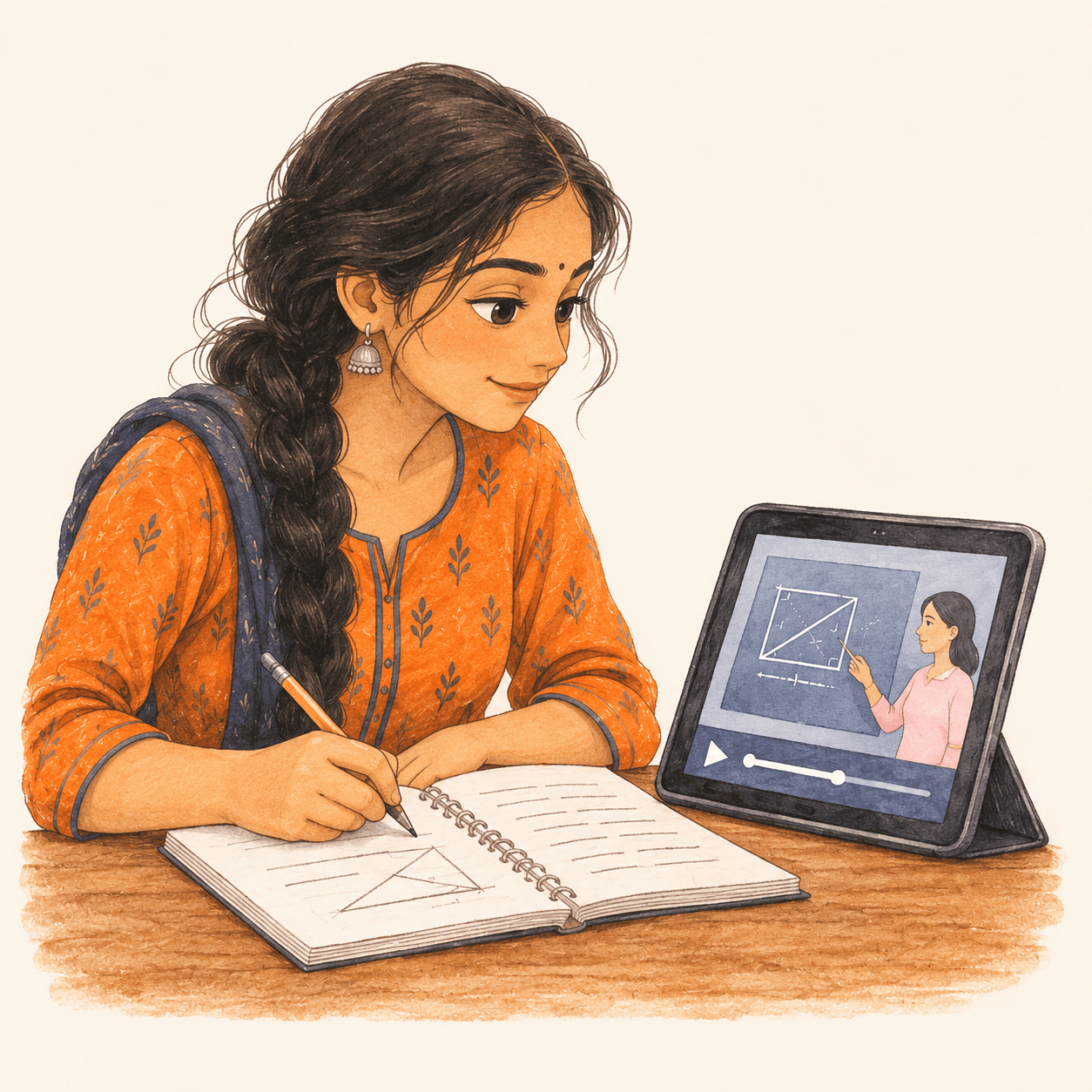
That explanation is useful. It can help you see how to approach the problem. But while watching, it can be difficult to tell which steps you would have thought of yourself.
When you come back to a similar problem later, try it before looking at the solution. You may be able to solve it, or you may find that you remember the beginning but need help with the next step. Either way, you get a clearer picture of what you can use on your own and what you can practise further.
Getting stuck does not mean you learned nothing. Perhaps you remember most of the boat’s folds but forget one. Returning to the video at that point can help you practise the step you need.
And doing well during practice can go together with lasting learning. A smooth practice session is useful information. It just does not tell us everything.
What can teachers look for?
When a student completes a task, it helps to notice the support they used. Did they follow an example, use a reference or work with someone? That support may be exactly what they need at this stage.
Later, return to the idea. Ask the student to explain a step, try a similar problem or use the skill in another suitable task. This can show what has stayed with them and what needs more attention.
The check should fit the learning goal. If students are learning to use a reference well, let them use it. If the goal is to explain something independently, give them a chance to do that without prompts.
One attempt still gives only part of the picture. Tiredness, uncertainty or an unfamiliar question can affect how a student performs. Look across their work before drawing a broad conclusion.
This does not mean turning every lesson into a test. It means making room to revisit an idea and using what you notice to plan the next explanation, support or practice.
A useful question is: What can the learner still explain or do when they return to this later?
Further reading • Learning versus performance: author overview (opens in a new tab) • Soderstrom and Bjork’s integrative review (opens in a new tab)